The Predator Archetype

Image

Image by Matt Mahurin

He is an opportunist, he watches women and he waits. He sees them, not as complete human beings, but as human-objects, as trophies, as a vehicle to boost his own sense of self. He watches the girl in the forest with the red hood and basket; he drives the roads at night, checking the sidewalk for vulnerable flesh. He sits outside the school and watches the kids who walk home alone. He lurks in the shadows of the parking lot at midnight. He stands by the bar taking stock of the drunkest women then focuses on his prey; he edges up behind her… 

Not long ago I had a conversation with a friend, in which she confided her various unwanted sexual experiences. She didn’t use the word ‘rape’ to describe any of them; she acknowledged her own complicity, albeit often under the affects of alcohol.  This brought up the topic of the predator archetype.  Stereotypically, the predator is a continuous threat for women, especially if they haven’t yet realised it, and for men, although they too can be preyed on, the threat of being accused of being a sexual predator is a terrifyingly real concern.  This archetype isn’t necessarily sexual and it isn’t exclusively male, but this is a prevalent theme.

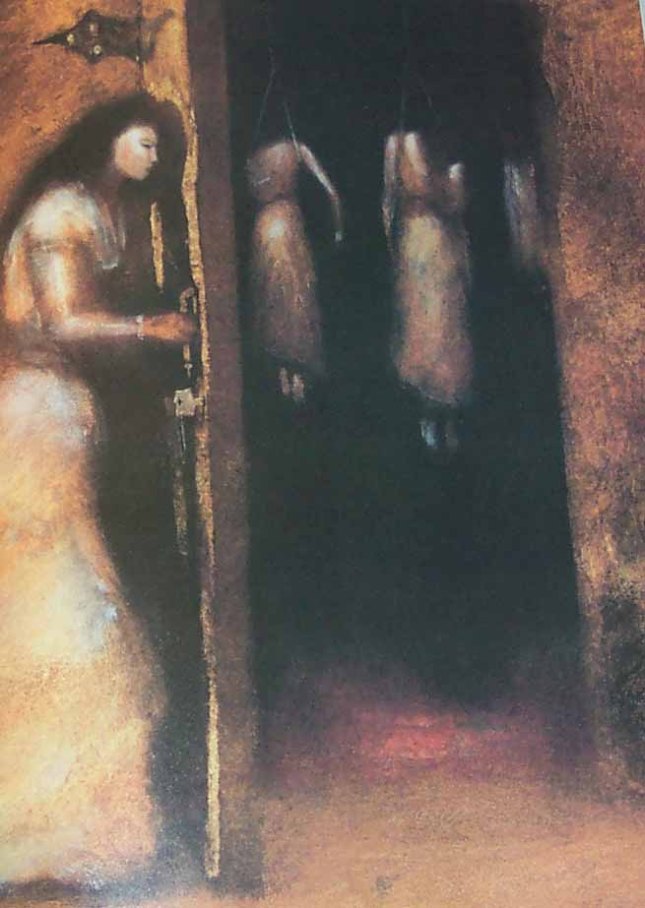
In the external world the predator is threatening and dangerous. Internally, this archetype is treacherous.  Clarissa Pinkola Estés talks about this archetype through the story of Bluebeard, the rich man with the unnervingly blue beard who seduces the youngest of three sisters into becoming his wife, against her older sisters’ better judgement. She is given all the keys to the castle and is allowed to use all but one. Of course, she must try it, who could resist opening Pandora’s box? Unlocking the horror of the grotesque corpses of Bluebeard’s previously murdered wives, she cannot hide, and rather than becoming a victim screaming and pleading to be spared she simply asks for time to make her peace with God, which turns out to be just time enough for her brothers to ride in and kill Bluebeard, saving her.

Estés considers the brothers to be the healthy male animus, the rescuers. The older sisters who do not trust Bluebeard represent intuition, the protagonist in this story is at first the naïve child and then the victim, and as for Bluebeard, he is the saboteur of the psyche. Bluebeard is a shadow archetype. I don’t know if this archetype can actually be killed, but shedding light on the shadow is the natural metaphor for dissolving it.

People of all genders possess the predator archetype.  Sometimes it seduces us into a false sense of security, letting us stray into perilous situations; sometimes it takes the reigns of our personality, manipulating and preying on the weaknesses of other people. Sometimes it runs rampant in sexual fantasies.  Sometimes the fear of being prey confines us to our comfort zones or contributes to obsessive-compulsive patterns.

Astrologically, the predator relates to the powerful shadow side of Scorpio and Pluto.  That is not to say that people with strong Scorpio influence are always predators, the sign is deep and complex, and everyone has Pluto and some Scorpio in their natal chart, it is more a question of where, what and how it manifests. The planets relating to sexuality: Mars and Venus (Pluto relates to sex but is in a sign for so long it is generational) in Scorpio could reflect an archetype with the tendency to exploit power or be exploited sexually.  Saturn is often considered to represent the Shadow in Jungian astrology, perhaps an afflicted Saturn could represent the predator manifesting internally or externally in a strong way. The unconsciousness of Pisces and delusions of Neptune are also relevant to this archetype.

Estés warns that young women are often unaware of the predator and so they fall, time and time again, into his trap, like Barbarella, never doubting or fighting until it is too late.  The friend who confided in me said she felt like she was one of those women, but she has learnt her lesson now. Growing up, I was always warned about creepy, dangerous men. My mother’s anxious fears have taken up residence in me to the point where I have been predominantly safe. I am terrified of the predator, never attracted to him. Perhaps it is the opposite extreme, where I have trouble feeling comfortable around men who do not feel totally ‘safe’ to me.

The predator archetype is everywhere in mainstream Western culture. Sometimes he is constructed as sexy, he is Edward Cullen or Christian Grey. Sometimes he is perverted, ugly and sleazy, he is the serial killer, the rapist.  The predator is the mascot for rape culture. Sometimes his behavior is socially sanctioned, sometimes it’s condemned. It is important to talk about him because it begins to shed some light.
The predator archetype part two

Archetypes and Transformation

Archetypes and Transformation

wpid-CAM00044.jpg

“The meeting of two personalities is like the contact of two chemical substances: if there is any reaction, both are transformed.” 
― C.G. Jung

Archetypes are the personalities within the personality. They are universal characters that pop up in various forms all over the world: the child, the clown, the victim, the rescuer, the predator, the hag… They are characters in films; they are characters inside us.

When we start to work with archetypes we open ourselves up for transformation. Each archetype we meet consciously has the potential to heal it’s broken twin within ourselves.

If you are a woman who has trouble in relationships with men it is likely you have a distorted, unhealthy animus, the male part of self. Likewise for men, their anima may be damaged or undeveloped. It is likely that, growing up, we didn’t have enough good relationships around us or opposite sex role models. Consciously thinking about, writing about, and creating a healthy animus or anima can help to restore balance to the psyche.

There are infinite possibilities for growth and healing with archetypes. Ask yourself: what reoccurring problems am I facing? What archetypes are involved? Are they damaged or distorted? Where did this come from in my childhood? What would this archetype be like if it was healthy?

The Bone Collector: the archetype of ressurection

DSC02127

In Women who Run with the Wolves, Clarissa Pinkola Estés begins with the story of La Loba, the collector of bones. The old woman, the crone, who carries a cure for everything. She stops and digs in the desert for a fragment of wolf skeleton and then, as night falls, she lays out every piece of the puzzle. As she chants and raises her hands flesh and sinew bond to the frame and fur materialises. The wolf breathes into her resurrection. She leaps up and runs towards a horizon. Halfway there she transforms into a laughing naked woman who disappears into the wild.

La Loba, much like Baba Yaga, is terrifying and magnificent as an archetype.  She is powerful and unpredictable and she doesn’t take kindly to bullshit.  If you are lucky you may see her at sunset when you are tired and thirsty and she may take a liking to you and show you something for the soul. In this story bone symbolises the parts of self that cannot decay, that cannot be destroyed, that remain. Bones symbolises the soul. Inspired by  Estés, I would like to tell another story. The story of a different bone collector.

Once there was and once there was not… a woman, a girl, a child, a maiden. In the darkest of nights she was shattered to her core. The pieces of her flew far and wide finding homes in other people, broken people, every piece, a small fragment of bone. A ghost now, a hollow shell, she summons her remaining energy to cast a spell – the kind all women know in their deepest desperation.  She creates the illusion of bones and flesh, of perfect, shining wholeness. Only out of the corner of your eye can you see the cracks show through. The spell makes her forgetful and blind. She stumbles around in the dark, looking for something to quench her thirst – the deep thirst of emptiness. She finds a boy, a man, a lover, and drinks of him. She feeds him more than she has in return and weaves, unconsciously, a spell around him – the fairy tale of a life, a happy future.  She gives too much and drinks all there is until the illusion vanishes, to her surprise, and all is grey and meaningless. Both she and he are devastated but there is nothing she can do to help. She must move on but as she turns to leave she catches a spark out of the corner of her eye: one thing left that is worth taking. She plucks the silver stone from his chest, her own fragment of bone, and leaves the crumbling ruins of the illusion. Slowly she wanders and the cycle repeats over and over. Every encounter seems much the same, every person reveals a little more of herself…

I’m not sure how this story ends. Maybe the girl becomes La Loba, maybe she eventually finds, through gathering the pieces of herself, some kind of wholeness that allows the spell of illusion to be broken.

Astrologically bones are ruled by Saturn and illusions and delusions by Neptune. There is something particularly Saturn in Scorpio about the re-claiming of fragments of bones through intimate encounters – in discovering the self through the mirroring of other people. This kind of projection also relates heavily to Neptune in the 7th house. Those of us with this natal combination are wonderful projection-artists when it comes to relating and relationships.  Neptune also embodies the wholeness of surrender and the final, 12th house, stage of the journey. Neptune’s native sign of Pisces is also heavily connected with Resurrection (Jesus fish). So in this story Neptune is both the obstacle and the goal.

Beginning the journey

The Forest

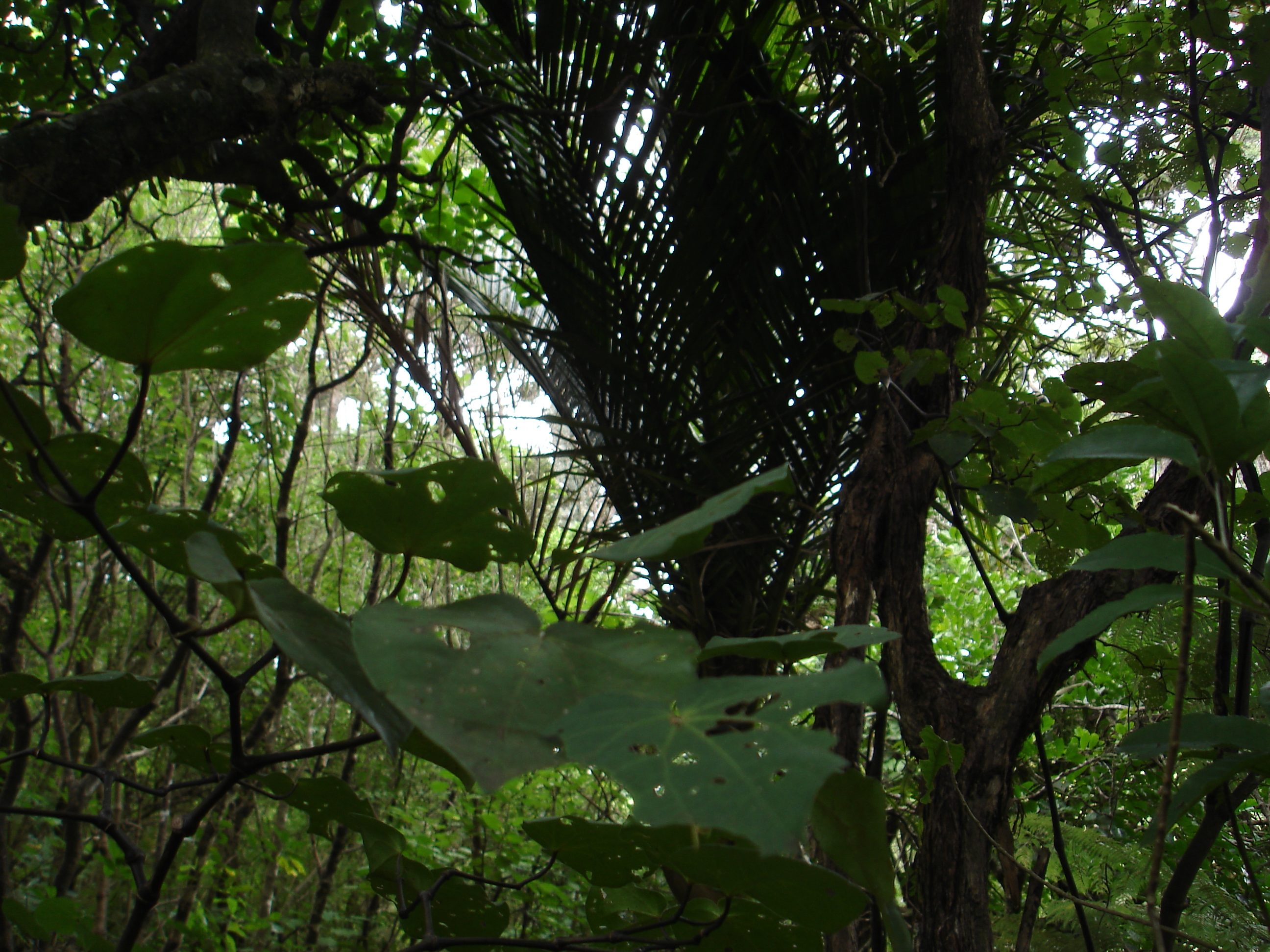
The beginning of an archetypal journey can be quite muddled. You are scraping through the sediment of the conscious mind, digging deeper into the dark. Sometimes you have to make a mess in order to clean up and this is one of those times. Sometimes you will look back and wonder why you even started down this path in the first place. It would be easier to live a life filled with television or set on the pursuit of a singular goal, or preoccupied by the comings and goings of those around you. Why did I chose transformation? What is the point? Why do I even bother? Such is the nature of despair, among the emotions which will be dredged up in this process. You will look forward and feel that no progress has been made, you will get stuck, you will stumble, that is part of the work. Other times you will reach a calm space, sit down on a washed up drift-wood tree trunk, sip tea from a thermos and look back at how far you’ve come. The further you trudge the lighter and clearer things become, that is, until the path narrows again and you’re back a the trench just like the last one, only this time you have grown more perspective. The following is a mythological interpretation of such a beginning. Take from it what you will. Look into her eyes. Pale moonlight skin. Dark hair and cloak. She reaches out, Come with me, holds out the dark blood apple. We reach for her hands. La Loba. The wild woman. Her face transforms into an old hag. She cackles. Hold on tight as she leads us through the forest, through the desert, through the ice. Drifting through a thousand lands and she still leads us, over a moonlit beach. A fern brushes my face. We are still in the forest. She turns, serpent face. A sly tongue darts out. She hisses. We follow still. The world comes up and washes over us. Transformation swirls inside. My head comes open, spilling out into the night sky and still she leads us – on and on – into the wild. Our wilderness. Wild lands. We open our eyes to pure white. We open again, lids peeling back like curtains to pitch blackness. We continue down the path. She sheds a million faces, reveals a million selves and the woods open up. Giant wings break free of her shoulder blades; tattered black feathers breathe. She takes flight and then turns on us. I am open. Her claws find our backs and we swoop into the sky. We fly forever. We know we will fall soon. She will let us go into our own metamorphosis. We reach the moon before she releases us to the drop. We fall. Fall. Wings break free from where her claws once touched. We cough and jolt simultaneously from our beds. A twig snaps beneath your foot. She is still leading us, on and on, through the forest. We are still starring into the mirror at the wild woman in our own eyes.